
Professor John O’Keefe is one of the most influential neuroscientists of the modern era, best known for discovering place cells and helping transform scientific understanding of how the brain represents space, memory, and navigation. His work eventually earned him the 2014 Nobel Prize in Physiology or Medicine, shared with May-Britt Moser and Edvard Moser.
What makes Professor John O’Keefe’s story particularly interesting is that his breakthrough did not come from studying an obvious human navigation system. Instead, his pioneering experiments involved recording the activity of individual neurons in freely moving rats. Those experiments revealed that certain hippocampal neurons became active when an animal occupied particular locations, providing evidence for an internal representation of space.
His career also reflects a long relationship with University College London, where he moved in 1967 for postdoctoral research and continued working for decades. Over time, his research helped establish ideas that became central to cognitive neuroscience, particularly the concept of the hippocampus as a cognitive map.
In this detailed biography, we look at Professor John O’Keefe’s early life, education, family background, scientific career, discovery of place cells, Nobel Prize, major awards, and lasting influence on neuroscience.
Quick Bio of Professor John O’Keefe
| Detail | Information |
|---|---|
| Full name | John Michael O’Keefe |
| Born | November 1939 |
| Birthplace | New York City, United States |
| Profession | Neuroscientist, psychologist, professor |
| Field | Cognitive neuroscience |
| Undergraduate degree | City College of New York |
| Graduate education | McGill University |
| Known for | Discovery of hippocampal place cells |
| Major institution | University College London |
| Nobel Prize | Physiology or Medicine, 2014 |
| Nobel co-laureates | May-Britt Moser and Edvard Moser |
| Major research area | Spatial memory and navigation |
Early Life and Family Background
Professor John O’Keefe was born in November 1939 in Harlem, New York, to Irish immigrant parents. He grew up in the South Bronx, in a family whose experiences were shaped by immigration, hard work, and the economic challenges of the era. His parents had arrived in New York shortly before the Great Depression.
His father worked as a mechanic on New York’s bus system after an accident prevented him from pursuing his original ambition of becoming an aircraft mechanic. His mother worked as a welder in the Newark shipyards during the Second World War. These details from O’Keefe’s own autobiographical account provide an unusually personal glimpse into the environment in which the future Nobel laureate grew up.
Education became an important part of his early path. After attending a local Catholic elementary school, O’Keefe received a scholarship to Regis High School, a Jesuit school in Manhattan known for its demanding academic environment. His early education helped establish a foundation for the broad intellectual interests that would later characterize his university years.
Professor John O’Keefe’s Education
After high school, O’Keefe eventually attended the City College of New York, where he developed interests that extended well beyond a single academic discipline. He studied subjects including psychology, philosophy, physics, literature, and filmmaking. According to his autobiographical account, he also worked several jobs while studying, including library work, showing classic European films, and driving a taxi.
His interest in experimental psychology became especially important. At City College, he encountered physiological psychology and became involved in experimental work examining animal behavior and brain function. That experience gave him his first real taste of experimental brain research and helped convince him that studying the nervous system could answer fundamental questions about behavior.
O’Keefe graduated from City College in 1963 with a major in psychology and a minor in philosophy. He then moved to McGill University in Montreal for graduate study. McGill was an especially important environment because the psychology department included major figures in the study of cognition, memory, and brain function.
At McGill, O’Keefe earned his MA in 1964 and PhD in 1967 in physiological psychology. His doctoral work was supervised by Ronald Melzack, while Donald Hebb’s intellectual influence also shaped the department. O’Keefe’s PhD research involved recording activity from the amygdala in freely moving animals, providing technical and conceptual preparation for his later hippocampal research.
Why McGill University Was Important to His Career
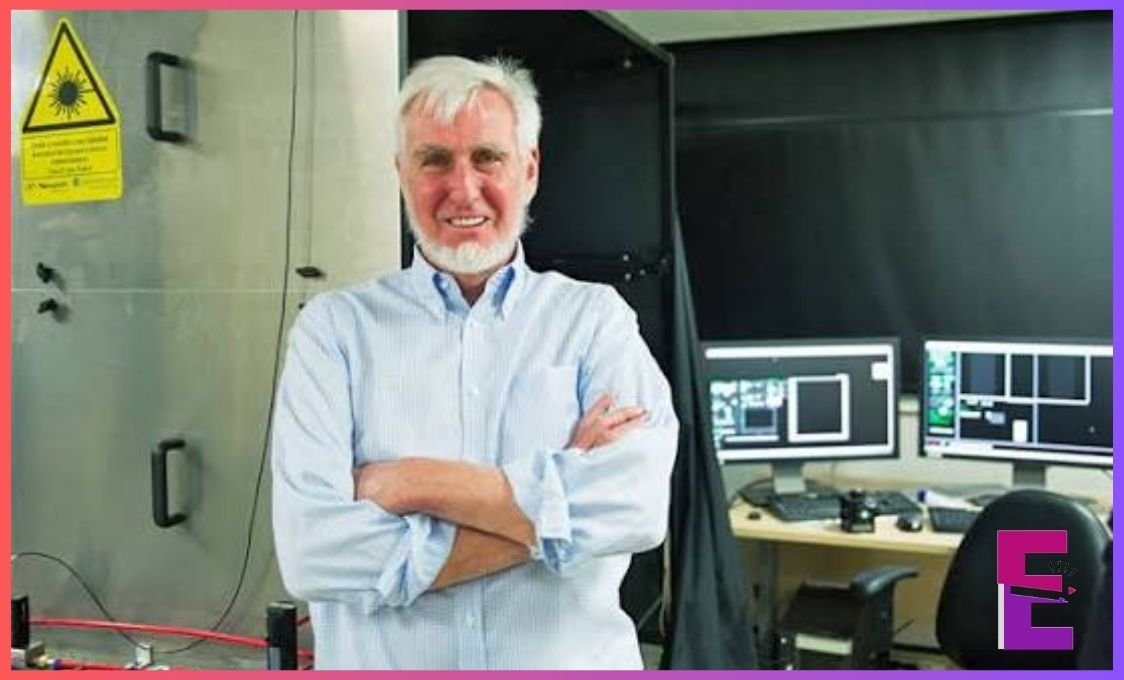
McGill played a major role in shaping Professor John O’Keefe’s scientific outlook. During his time there, he encountered a research culture interested in understanding cognition through the workings of the brain rather than treating psychology and biology as completely separate subjects.
Donald Hebb was one of the major intellectual influences around the department. Hebb’s ideas about neural networks and cognition provided a theoretical framework for thinking about how physical brain structures might produce complex mental functions. O’Keefe later built on this broad tradition through his research into spatial representation.
Another important influence was Brenda Milner’s research into the hippocampus and memory. O’Keefe became interested in the possibility that studying the hippocampus in animals could reveal more about the neural mechanisms underlying memory and behavior. That interest eventually became central to his life’s work.
His doctoral training also helped him develop techniques for recording activity from individual neurons in awake, freely moving animals. This technical experience would prove crucial because his most famous discovery depended on being able to monitor individual neurons while an animal naturally explored its environment.
Move to University College London
In 1967, Professor John O’Keefe moved from Canada to England and began postdoctoral work at University College London. He worked as a U.S. National Institute of Mental Health postdoctoral fellow in the laboratory of Patrick Wall.
The move turned out to be much more than a temporary research appointment. O’Keefe and his wife, Eileen, decided they wanted to experience Europe, and London became their long-term home. His relationship with UCL ultimately lasted for the rest of his professional career.
At UCL, O’Keefe increasingly focused on the hippocampus. The structure was already known to be connected with memory, but many questions remained about exactly how it contributed to behavior and cognition. O’Keefe approached the problem through electrophysiological recordings from freely moving animals.
That decision placed him in a position to observe something that researchers had not previously understood: individual neurons could have remarkably specific relationships with an animal’s location in its surroundings.
The Discovery of Place Cells
The discovery of place cells is the achievement most closely associated with Professor John O’Keefe.
In 1971, O’Keefe and his colleague John Dostrovsky published research describing unusual activity in neurons located in the hippocampus of freely moving rats. Certain neurons became active when an animal occupied a particular location within an environment. Different neurons could become active in different locations.
O’Keefe called these neurons place cells. The name was simple, but the underlying discovery was profound. It suggested that the brain could represent an animal’s location through patterns of neural activity.
Imagine walking into a familiar room. You do not need to consciously calculate every step or measure every wall to know roughly where you are. Your brain appears to maintain an internal representation of the surrounding environment. O’Keefe’s research provided important evidence for how such a system might work at the cellular level.
The significance went beyond simply finding neurons that reacted to particular positions. O’Keefe argued that groups of place cells could collectively represent an environment, creating what could be described as an internal map. This became an important part of the broader theory of the hippocampus as a cognitive map.
What Exactly Are Place Cells?
Place cells are specialized neurons found in the hippocampus that tend to become active when an animal occupies a particular region of an environment.
Importantly, a place cell is not simply a basic sensor that detects one visual object. Its activity is related to the animal’s position within an environment, and different neurons can have different spatial firing patterns. The collective activity of many such neurons can therefore provide a representation of where the animal is.
This helped change the way scientists thought about the hippocampus. Instead of viewing it only as a structure involved in memory in a general sense, researchers could begin investigating how specific patterns of neuronal activity might represent aspects of experience.
The discovery also raised larger questions. If the hippocampus contains a representation of where an animal is, could it also contribute to remembering where events occurred? Could spatial representation be connected to episodic memory? These questions became major areas of research in cognitive neuroscience.
The Hippocampus as a Cognitive Map
Professor John O’Keefe’s research eventually contributed to the influential idea that the hippocampus functions as part of a cognitive mapping system.
In 1978, O’Keefe and Lynn Nadel published The Hippocampus as a Cognitive Map. The book developed the argument that the hippocampus plays an important role in spatial representation and navigation. It became a landmark work in the development of cognitive neuroscience.
The cognitive map idea was important because it connected neural activity with a sophisticated cognitive ability: understanding one’s relationship to the surrounding environment.
Rather than treating behavior as a simple chain of stimulus and response, the theory suggested that the brain could construct internal representations of the world. An animal could use those representations to understand where it was and navigate toward goals.
The theory also helped establish spatial cognition as a major field of neuroscience research. Later discoveries involving other specialized neurons would strengthen the broader picture of how the brain represents space.
Professor John O’Keefe and Grid Cells
O’Keefe’s place-cell discovery was eventually complemented by another major discovery made by May-Britt Moser and Edvard Moser.
In 2005, the Mosers identified grid cells in the entorhinal cortex. Unlike place cells, which tend to fire in relation to particular locations, grid cells display activity patterns organized into a grid-like arrangement across an environment.
The discovery was important because it suggested that the brain’s navigation system includes multiple specialized components. Place cells could represent particular locations, while grid cells could provide a coordinate-like framework for navigation.
Together with other spatially responsive cells, these systems offered a more complete explanation of how the brain could determine position and navigate through an environment.
The relationship between O’Keefe’s work and the Mosers’ research eventually became central to the Nobel Prize awarded in 2014. The Nobel Assembly described these discoveries as components of a positioning system in the brain, famously comparing the system to an internal GPS.
Professor John O’Keefe and Spatial Memory
One reason O’Keefe’s work became so influential is that spatial navigation is closely connected with memory.
Knowing where you are is useful, but remembering locations is equally important. If you have visited a particular place before, your brain needs to retain information about its layout and your relationship to it. The hippocampus became increasingly important to scientists studying this relationship between memory and space.
O’Keefe’s experiments suggested that place-cell activity could change according to environmental conditions. Different combinations of active cells could therefore represent different environments. This provided a cellular perspective on how memories of places might be represented in the brain.
His research helped create a bridge between psychological theories of memory and biological research into neurons. Instead of discussing memory only in abstract behavioral terms, scientists could investigate how patterns of individual cells and neural networks might encode aspects of experience.
Professor John O’Keefe’s Research Methods
A major part of O’Keefe’s success came from methodology.
His research relied on recording the activity of individual neurons while animals moved freely through an environment. This approach allowed him to connect patterns of neuronal firing with natural behavior rather than restricting animals to highly artificial tasks.
The technology required careful experimentation. Researchers had to record neural activity while simultaneously tracking the animal’s movements. This combination made it possible to determine whether a neuron’s activity was related to location, movement, direction, or other aspects of behavior.
O’Keefe’s work therefore illustrates an important principle in neuroscience: major discoveries can emerge when technological advances allow researchers to ask questions that were previously difficult or impossible to investigate.
Professor John O’Keefe’s Family and Personal Life
Professor John O’Keefe has generally been recognized publicly for his scientific achievements rather than for maintaining a highly public personal life.
His autobiographical writings do, however, provide some information about his family. He met his wife, Eileen, while studying philosophy at City College of New York. Their relationship continued as he pursued graduate education and later moved to Britain.
O’Keefe has also written that he and Eileen had children after moving to England. His autobiography notes that their first son was born after their arrival in the United Kingdom and that they later adopted a second son.
Beyond these details, relatively little emphasis has traditionally been placed on his family’s private life in major academic biographies. That makes it important to distinguish between information he has publicly shared and speculation about his family relationships.
Professor John O’Keefe’s Life in the United Kingdom
Although O’Keefe was born in New York, Britain became an important part of both his professional and personal life.
He and Eileen reportedly enjoyed their life in England after moving there in the late 1960s. O’Keefe’s autobiography describes the British environment, institutions, walking trails, and cultural life as fitting well with their lifestyle.
Professionally, UCL gave him the environment he needed to continue long-term experimental research. He remained at the university after his postdoctoral fellowship, eventually becoming a professor in 1987.
O’Keefe has held both United States and United Kingdom citizenship, reflecting the two countries that have shaped his personal and professional journey.
Academic Career at UCL
Professor John O’Keefe‘s association with UCL lasted for decades and became one of the defining features of his career.
He progressed from postdoctoral researcher to professor and became internationally recognized for his work on hippocampal function, spatial memory, and navigation. His laboratory also contributed to the development of experimental approaches for studying neural activity during behavior.
In June 2013, O’Keefe was appointed inaugural director of the Sainsbury Wellcome Centre for Neural Circuits and Behaviour at UCL. The center was created to support research into how neural circuits generate perception, behavior, memory, and other functions.
His leadership role reflected the broader direction of his scientific interests. After spending much of his career studying individual neurons and hippocampal circuits, he became involved with a research environment designed to investigate neural circuits using increasingly sophisticated technologies.
The 2014 Nobel Prize
The biggest public recognition of Professor John O’Keefe’s career came in October 2014.
He was awarded the Nobel Prize in Physiology or Medicine jointly with May-Britt Moser and Edvard I. Moser. The award recognized their discoveries of cells that constitute a positioning system in the brain. O’Keefe received one half of the prize, while the other half was jointly awarded to the two Mosers.
The Nobel Committee highlighted O’Keefe’s discovery of place cells in the hippocampus as the first component of this positioning system. More than three decades later, the Mosers’ discovery of grid cells supplied another important component.
The award was significant beyond the field of neuroscience. It demonstrated that something as complex as spatial awareness could be studied at the level of individual neurons and neural networks.
Why the Nobel Discovery Matters
The idea of an “inner GPS” became a useful way to explain O’Keefe’s research to the general public.
Humans constantly navigate physical environments. We recognize familiar locations, remember routes, understand where objects are positioned, and adjust our movements accordingly. O’Keefe’s work helped reveal the cellular machinery involved in some of these abilities.
The Nobel Assembly described the combined discoveries as a paradigm shift in understanding how groups of specialized nerve cells work together to perform higher cognitive functions.
The work also became relevant to research into neurological disorders. The hippocampus and entorhinal cortex are affected in conditions involving memory loss, including Alzheimer’s disease. Understanding spatial coding therefore offers researchers another way to investigate what happens when memory and navigation systems become impaired.
Major Awards and Honors
The Nobel Prize was the most famous honor in O’Keefe’s career, but it was far from his only major recognition.
In 2008, he received the Peter and Patricia Gruber Foundation Neuroscience Prize for his pioneering work concerning the neural basis of complex cognitive functions in freely moving animals. The award recognized the importance of his place-cell research and broader contributions to neuroscience.
He also received the 2014 Kavli Prize in Neuroscience, sharing the award for the discovery of specialized brain networks involved in memory and cognition. His list of honors also includes the Feldberg Foundation Prize, Grawemeyer Award for Psychology, British Neuroscience Association Award, and Louisa Gross Horwitz Prize.
In 2019, O’Keefe was elected an Honorary Member of the Royal Irish Academy. The honor recognized his contribution to science and further reflected the international reach of his career.
Professor John O’Keefe’s Influence on Neuroscience
O’Keefe’s influence extends well beyond the original discovery of place cells.
His work helped demonstrate that complex cognitive functions could be studied by examining patterns of activity across specialized populations of neurons. That approach has become fundamental to modern systems neuroscience.
The discovery also encouraged researchers to look for additional forms of spatial coding. Scientists subsequently identified head-direction cells, grid cells, boundary-related cells, and other specialized neurons that contribute to an increasingly detailed picture of the brain’s navigation system.
Perhaps most importantly, the research helped break down the artificial division between psychology and biology. Questions about memory, navigation, cognition, and behavior could increasingly be investigated through experiments at the level of neural circuits.
Research Into Alzheimer’s Disease and Memory
The implications of O’Keefe’s research are not limited to understanding healthy brains.
Because spatial memory depends heavily on the hippocampal and entorhinal systems, researchers have become interested in how these circuits change during neurodegenerative diseases. Alzheimer’s disease is particularly relevant because the hippocampal and entorhinal regions can be affected early in the disease process.
O’Keefe’s work helped provide a framework for investigating how changes in neuronal representations might relate to changes in behavior.
Researchers can examine whether animals with neurological abnormalities maintain stable spatial representations or whether their place-cell activity becomes disrupted. These approaches can connect changes at the cellular level with observable problems in learning and navigation.
It is important, however, not to overstate the medical implications. O’Keefe’s discoveries provide fundamental knowledge and research tools; they do not by themselves constitute a cure or diagnostic test for Alzheimer’s disease.
Professor John O’Keefe’s Approach to Scientific Research
One of the most interesting aspects of O’Keefe’s career is his willingness to pursue difficult basic research over long periods.
His autobiographical writings describe a career heavily focused on experimental work, with funding strategies that allowed him to maintain substantial research time. He often worked on questions whose significance was not immediately obvious but that could potentially reshape understanding of brain function.
That approach is particularly relevant to his place-cell discovery. When the initial observations were made, the interpretation that hippocampal neurons were representing location was not immediately accepted by everyone.
O’Keefe continued investigating the phenomenon, testing different environmental conditions and exploring how place-cell activity related to spatial behavior. Over time, evidence from his own laboratory and other research groups helped establish the significance of the discovery.
The 2026 Perspective on His Work
O’Keefe’s scientific story continues to attract attention because the discovery of place cells remains an active area of neuroscience.
In 2026, UCL Discovery published O’Keefe’s account of the events leading to the 1971 discovery of hippocampal place cells. The paper revisits the development of the discovery and the ideas that eventually contributed to interpreting the hippocampus as a cognitive map.
This continuing interest demonstrates how enduring the discovery has been. Rather than becoming merely a historical footnote, place cells remain part of current research into memory, cognition, navigation, and neural computation.
It also gives researchers and students a chance to understand the discovery from O’Keefe’s own perspective, including the experimental challenges and intellectual influences that shaped his thinking.
Professor John O’Keefe’s Legacy
The legacy of Professor John O’Keefe can be understood on several levels.
Scientifically, he helped establish that individual neurons can encode meaningful information about an animal’s position in the world. The discovery gave neuroscientists a concrete way to investigate how the brain represents space.
Theoretically, his collaboration with Lynn Nadel helped establish the cognitive map concept as an important framework for thinking about hippocampal function. Later discoveries of grid cells and other spatially tuned neurons expanded that framework into a broader model of neural navigation.
Educationally, O’Keefe’s career also serves as an example of how psychology, philosophy, biology, and technology can intersect. His early interest in several disciplines ultimately contributed to a scientific career that changed the way researchers think about cognition.
What Makes Professor John O’Keefe’s Story Remarkable?
There is a natural tendency to view Nobel Prize winners as people who followed an obvious path toward a major discovery. O’Keefe’s story is more complicated and, in some ways, more relatable.
His early academic interests were broad. He studied philosophy, literature, physics, psychology, and other subjects before settling into scientific research. He worked various jobs while attending college and did not necessarily begin with a clear plan to become a world-famous neuroscientist.
His breakthrough also came from a question that sounds deceptively simple: how does the brain know where we are?
By pursuing that question through painstaking experiments, O’Keefe helped uncover a cellular system that turned out to be fundamental to navigation and spatial memory.
Final Thoughts on Professor John O’Keefe
Professor John O’Keefe’s biography is ultimately a story about curiosity, persistence, and the value of asking fundamental questions.
Born to Irish immigrant parents in New York and educated at the City College of New York and McGill University, he developed a scientific career that eventually took him to University College London. There, his experiments with freely moving animals led to the discovery of place cells and a new way of thinking about the hippocampus.
His work later connected with the discovery of grid cells by May-Britt and Edvard Moser, helping reveal a sophisticated neural positioning system sometimes described as the brain’s internal GPS. The significance of those discoveries was formally recognized with the 2014 Nobel Prize in Physiology or Medicine.
Yet perhaps the most lasting part of Professor John O’Keefe’s contribution is not the Nobel medal itself. It is the scientific idea that a collection of specialized neurons can represent something as complex as our position in the world. That insight continues to influence research into memory, cognition, navigation, and neurological disease.
For anyone interested in neuroscience, Professor John O’Keefe’s career offers a fascinating example of how patient experimentation can turn a seemingly ordinary question—how does the brain know where we are?—into a discovery that changes an entire field.
FAQs About Professor John O’Keefe
1. Who is Professor John O’Keefe?
Professor John O’Keefe is an American-British neuroscientist and professor best known for discovering hippocampal place cells. His research has focused on spatial memory, navigation, hippocampal function, and the neural representation of space.
2. What did Professor John O’Keefe discover?
Professor John O’Keefe discovered place cells in the hippocampus in 1971. These neurons become active when an animal occupies particular locations within an environment and are considered an important component of the brain’s spatial positioning system.
3. Did Professor John O’Keefe win a Nobel Prize?
Yes. Professor John O’Keefe won the 2014 Nobel Prize in Physiology or Medicine jointly with May-Britt Moser and Edvard Moser. The prize recognized their discoveries concerning cells that form a positioning system in the brain.
4. Where did Professor John O’Keefe study?
O’Keefe earned his bachelor’s degree from the City College of New York. He later earned an MA in 1964 and a PhD in 1967 from McGill University, where he studied physiological psychology.
5. Is Professor John O’Keefe married?
Yes. O’Keefe’s autobiographical account states that he met his wife, Eileen, while taking an advanced philosophy course at City College of New York. He later moved with her to England, where they built their family life.
6. Why is Professor John O’Keefe important to neuroscience?
Professor John O’Keefe helped show how the brain represents physical space at the level of individual neurons. His discovery of place cells and his work on the hippocampus helped establish important foundations for modern research into spatial memory, navigation, cognition, and neural representation.
You Missed: Jonathan Roumie Biography